Working with a designer
What a garden design plan includes — and what affects what it costs
What you typically get from a residential garden design plan, the difference between a consultation, a planting plan and a full design, and the factors that make one project cost more than another.

By Amanda Kupsti
· Updated · 7 min read
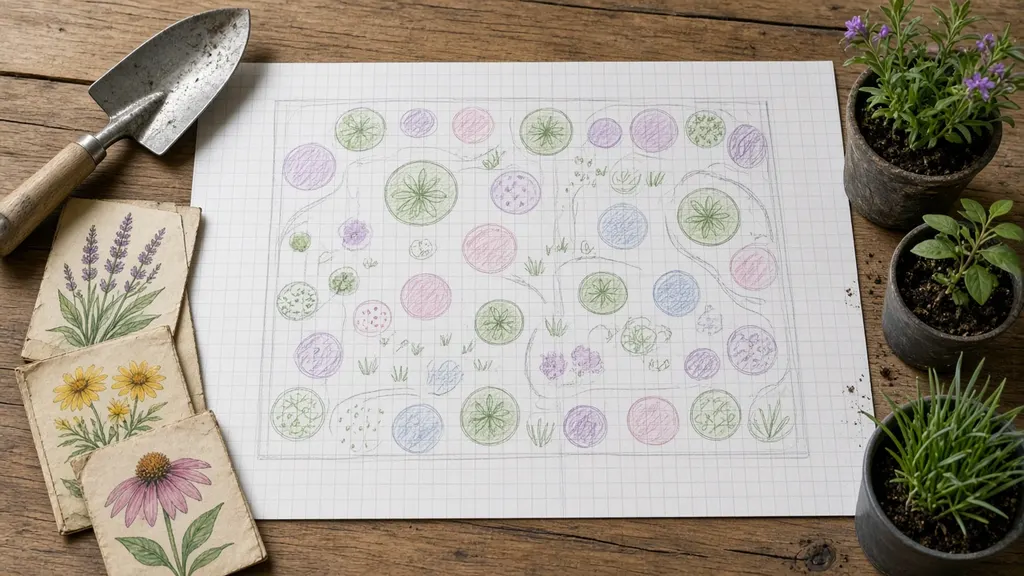
People often ask what a "garden plan" actually is before they ask what one costs. That makes sense: the phrase covers everything from a quick sketch on a napkin to a scaled drawing with a plant schedule, installation notes and a maintenance guide. Knowing what you are buying helps you decide whether you need a designer at all — and if you do, which kind of help fits your project.
This article explains the common levels of garden design help, what each typically includes, and the factors that make one project more involved than another. I deliberately do not quote market-wide prices here: they vary a great deal by region, by designer and by year, and any single number would mislead more than it helps. Instead, use the factors below to compare quotes and to understand why they differ.
Three levels of help
Most residential garden design work falls into one of three shapes.
| Consultation | Planting plan | Full design | |
|---|---|---|---|
| Typical format | A site visit and conversation | A scaled drawing of one or more beds | Drawings for the whole yard, often phased |
| What you leave with | Notes, plant suggestions, next steps | Plant list, quantities, spacing and layout | Layout, hardscape ideas, planting plans, phasing |
| Good for | DIY gardeners who want a second opinion | Converting a lawn area or redoing a bed | Bigger changes, slopes, drainage, multiple areas |
| Who installs | You | You or a landscaper | Usually a landscaper, sometimes in phases |
A consultation
A consultation is usually a walk around the yard with a designer, talking through what you want, what the site can support and which plants suit it. It is the right choice if you are comfortable doing the work yourself and want to avoid expensive mistakes — choosing the wrong plants for clay, or putting a sun-loving bed in the shade of next year's tree canopy.
A planting plan
A planting plan is a drawing of one or more beds showing exactly which plants go where and how many to buy. It usually includes a plant list with quantities, spacing, and notes on preparation and care. This is the most common service for small native gardens: it turns "I want to replace part of my lawn" into a shopping list and a layout you can install yourself over a weekend.
A full design
A full design looks at the whole property — how you move through it, where water goes, what you see from the windows, where the patio or path should be — and then plans planting within that framework. It often includes several planting plans and a phasing schedule so the work can be spread over a few seasons.
A good plan is not the most detailed one. It's the one you can actually install and keep up with.
What a planting plan usually includes
- A scaled drawing of the bed, with each plant or group marked
- A plant schedule: names, quantities, pot sizes and spacing
- Notes on site preparation — turf removal, edging, soil
- A bloom-time chart or seasonal notes
- First-year watering and weeding guidance
- Notes on where to buy plants locally, when relevant
What affects how much a project costs
Two quotes for "a planting plan" can differ a lot, and usually for understandable reasons. These are the factors that change the amount of work involved.
| Factor | Simpler | More involved |
|---|---|---|
| Area | One bed | Several beds or the whole yard |
| Site conditions | Flat, sunny, average drainage | Slopes, wet spots, deep shade, poor drainage |
| Existing features | Lawn only | Trees, utilities, structures, old plantings to work around |
| Level of detail | Plant list and layout | Scaled drawings, hardscape, lighting, phasing |
| Installation | You install it | Designer coordinates installation or a contractor |
| Meetings and revisions | One round | Several rounds of changes |
| Plant sourcing | Common natives from local sales | Specific cultivars, larger sizes, special orders |
Costs beyond the plan itself
When budgeting, remember the plan is only part of the total. Plants, mulch, edging, any hardscape and labor if you are not installing it yourself all add up. Small plugs are much less expensive than larger potted plants and establish well, which is one reason I often recommend them. Spreading a project over two or three seasons also spreads the cost.
How to compare quotes
- Ask what's included. A drawing? A plant list with quantities? Care notes? A follow-up visit?
- Ask how revisions work. How many rounds of changes are included?
- Ask who installs. Does the quote cover installation, or only the design?
- Ask about plant choices. Will the plan favor locally native plants suited to your soil and light?
- Ask for an example. A sample plan from a previous project (with private details removed) tells you a lot.
A checklist before you contact a designer
- Take photos of the area from several angles, plus a wide shot
- Measure the area roughly, or sketch it with approximate dimensions
- Note sun and shade at a few times of day
- Write down what you want: low water, pollinators, privacy, curb appeal
- Decide whether you want to install it yourself
- Have a rough budget range in mind, including plants
What happens during a site visit
Whatever level of help you choose, most projects start with someone walking the property. A site visit is where a lot of the real design thinking happens, even if nothing is drawn yet. Here is what I am looking at — and what any good designer should be paying attention to.
Light through the day
Sun is the single biggest factor in what will grow. I note which areas get morning sun, afternoon sun or shade from buildings and trees, and I think about how that changes through the year. A bed that is sunny in April can be shaded by June when the neighbor's maple leafs out.
Water: where it comes from and where it goes
Downspouts, low spots, slopes toward the house, the area that stays soggy after a storm — these shape the plan as much as sunlight does. Sometimes the best first step is moving a downspout extension before planting anything.
What is already there
Existing trees, shrubs and perennials are often worth keeping. So are paths people already use, even informal ones across the lawn. A plan that fights how a household actually moves through a yard rarely survives the first summer.
Soil and access
I check how the soil behaves, where utilities are likely to run, and how plants, mulch and equipment would get into the space. A backyard reachable only through a narrow side gate is planned differently from an open front yard.
Questions a designer will probably ask you
A good plan comes from a good conversation. Thinking about these ahead of time makes any consultation more useful:
- How do you use the yard now, and how would you like to use it?
- What do you see from your windows, and which views matter most?
- How much time would you realistically spend on the garden in a typical month?
- Do you have pets or children who use the space?
- Are there plants you love — or plants you never want to see again?
- Is there a homeowners' association or neighborhood rule to work within?
- Do you want to install the plan yourself, hire it out, or a mix?
Good signs when choosing someone to work with
- They ask about your site and how you use it before talking about plants.
- They explain what is and is not included, in writing.
- They are honest that native plantings take a season or two to fill in.
- They are comfortable designing something you can install yourself, if that is what you want.
- They recommend plants suited to your conditions rather than a standard list.
Phasing a plan over several seasons
A plan doesn't have to be installed all at once. Many of the gardens I work on are built in stages, and a good plan makes that easy by showing which areas belong together and what order makes sense.
A common sequence looks like this: in the first season, fix drainage and prepare the beds closest to the house; in the second, plant the main front or back border; in the third, add shrubs, paths or a seating area. Each phase stands on its own, so the yard looks intentional at every step rather than half-finished.
Phasing also spreads out the work and the spending, and it lets you learn from the first beds before committing to the next. If a corner turns out wetter or shadier than expected, the later phases can adjust.
Do you need a designer at all?
Many people don't. If you are starting with one small, sunny bed, a short plant list and a good guide may be all you need — my first-season front lawn plan is written for exactly that. A designer is most useful when the site is tricky (slopes, drainage, deep shade, heavy clay — see planting in Omaha clay), when you are changing a large area, or when you simply want a plan you can trust and someone to think through the details.
If you'd like to know how I work, the services page describes each option and what it includes.
Last updated
Related guides
Design
A pollinator garden for a small Omaha yard: what to plant and how to lay it out
How to fit a useful pollinator garden into a small city yard, patio edge or side strip in Omaha — bloom sequence, host plants, sun and part-shade lists, and simple layouts.
· 7 min read
Plants
Keeping rabbits and deer from eating your native garden in Omaha
Which native plants rabbits and deer tend to leave alone, how to protect new plantings, and simple fencing and timing strategies that work in Omaha neighborhoods and edge-of-town yards.
· 7 min read
Plants
Drought-tolerant native plants for Omaha yards: a practical list
Native plants that handle Nebraska's hot, dry summers once established — sorted by sun, height and use — plus how to water a new planting so it becomes drought tolerant.
· 7 min read