Soil & site
Planting in Omaha clay soil: what actually helps (and what to skip)
Why so many Omaha yards have heavy clay, how to test drainage at home, which native plants handle it, and why big amendments often make clay problems worse.

By Amanda Kupsti
· Updated · 7 min read
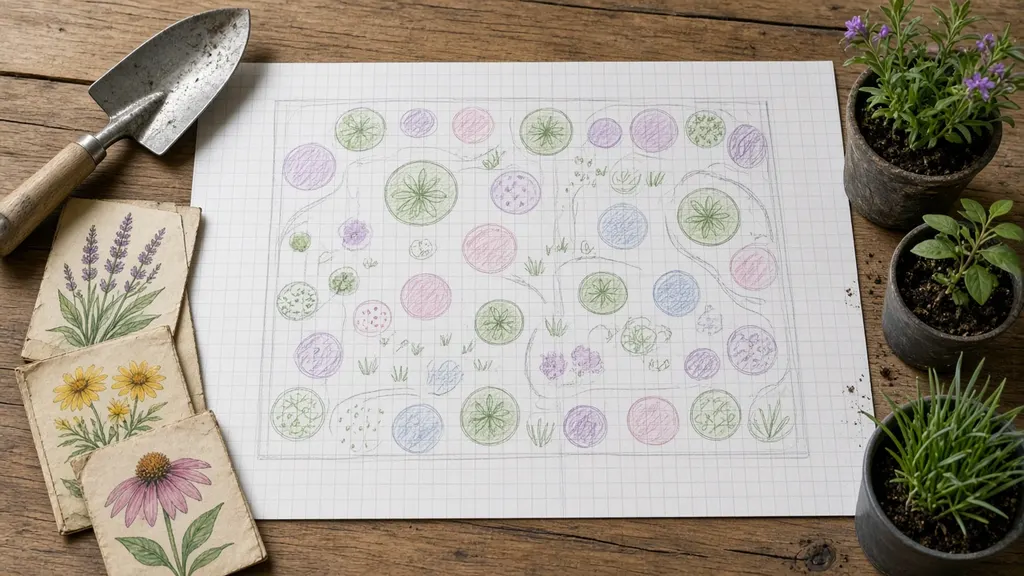
If you have dug a hole anywhere in the Omaha area, you probably already know about the clay. In spring it is sticky enough to pull a boot off. By August it can crack into plates you could slide a pencil into. Many newer subdivisions have it worse, because grading during construction often strips the topsoil and leaves compacted subsoil behind with a thin layer of sod on top.
The common advice is to "amend heavily" — dig in bags of compost, sand or topsoil until the clay behaves. For most native plants, that advice is at best unnecessary and at worst counterproductive. This guide explains what clay is actually like to garden in, how to test yours, and what genuinely helps.
Why clay is not the enemy
Clay soil is made of very fine particles packed closely together. That has real downsides — it drains slowly, it compacts easily, and it can be hard for young roots to push through. It also has real advantages: it holds water and nutrients far better than sandy soil, which is exactly what keeps plants going through a dry Nebraska summer.
Many prairie plants native to eastern Nebraska evolved in heavy, fine-textured soils. Deep-rooted species like little bluestem, coneflowers and compass plant send roots down several feet over a few seasons, and as those roots grow and die back, they open channels that improve drainage far below anything you could reach with a shovel.
The best soil amendment for prairie clay is a prairie plant with a deep root and three years of patience.
Test before you change anything
Before buying amendments, find out how your soil actually behaves. Two simple tests tell you most of what you need.
The drainage test
- Dig a hole about a foot deep and a foot wide where you want to plant.
- Fill it with water and let it drain completely — this wets the surrounding soil.
- Fill it again and check how long it takes to empty.
| Time to drain | What it means | What to do |
|---|---|---|
| Under 1 hour | Drains quickly for clay | Almost any clay-tolerant native will do well |
| 1–4 hours | Typical Omaha clay | Choose clay-tolerant plants; no major amendment needed |
| 4–12 hours | Slow; often compacted | Loosen the planting area, choose plants that tolerate wet feet |
| More than a day | Poor drainage or a hardpan | Consider a rain garden plant list, or address grading and downspouts |
The squeeze test
Take a handful of moist soil and squeeze it. If it forms a ribbon when pushed between thumb and finger, it has a lot of clay. If it crumbles, it has more silt or sand mixed in. Many Omaha yards are a silty clay loam rather than pure clay, which is good news — it is fertile and workable once it is not compacted.
If you want precise numbers for pH and nutrients, the University of Nebraska–Lincoln extension office can point you to soil testing options. For native plants, a lab test is helpful but not essential; most of them are not heavy feeders.
Why heavy amending can backfire
The instinct is to dig a hole, throw out the clay, and fill the hole with rich compost or bagged garden soil. In clay, that can create what gardeners call a "bathtub" effect: water drains easily into the loose, amended hole but then cannot drain out through the dense clay around it. Roots sit in water after every heavy rain, and plants that would have been fine in plain clay rot.
Adding sand is another common suggestion. Unless you add a very large amount, sand mixed into clay can produce something closer to concrete than to loam.
What genuinely helps
- Loosen, don't replace. Use a garden fork to loosen the whole planting area when the soil is moist but not wet. Working clay when it is soaked destroys its structure.
- Plant at the right moisture. If soil sticks to your shovel in a smear, wait. If it shatters into hard clods, water it a day ahead.
- Mulch the surface. Two to three inches of shredded hardwood mulch keeps clay from crusting, moderates temperature and slowly adds organic matter from the top down — the way soil builds naturally.
- Stay off it. Foot traffic on wet clay compacts it quickly. Add a few stepping stones so you can weed without packing the soil.
- Fix the water source. If a bed stays soggy, look at downspouts and grading before changing the soil. Redirecting a downspout is often the whole fix.
Native plants that handle Omaha clay
The plants below are widely planted in clay soils across eastern Nebraska. Most also handle dry spells once established, because the same clay that drains slowly also holds moisture deep down.
| Condition | Plants to try |
|---|---|
| Full sun, average drainage | Purple coneflower, little bluestem, black-eyed Susan, rough blazing star, aromatic aster, prairie dropseed |
| Full sun, slow drainage | Swamp milkweed, blue flag iris, Joe-Pye weed, switchgrass, prairie blazing star |
| Part shade, clay | Wild geranium, Virginia bluebells, Pennsylvania sedge, wild columbine, zigzag goldenrod |
| Tough spots by drives and walks | Prairie dropseed, little bluestem, aromatic aster, butterfly milkweed |
For hot, exposed parts of a yard, my list of drought-tolerant natives overlaps heavily with this one.
Planting into clay: step by step
Prepare
Remove turf and loosen the whole bed to a fork's depth when the soil is moist, not wet.
Place
Set out plants in their pots first. Adjust spacing and groupings before digging.
Plant
Dig each hole only as deep as the root ball and a little wider. Don't fill it with compost.
Firm
Backfill with the same soil you removed. Press gently and water slowly to settle it.
Mulch
Spread mulch around, not on top of, the plant crowns. Water deeply once a week while establishing.
A clay-planting checklist
- Run the drainage test before buying plants
- Check downspouts and grading for water problems
- Loosen the whole bed, not individual holes
- Backfill with native soil; skip the sand
- Mulch two to three inches, keeping it off plant crowns
- Add stepping stones so you are not walking on the bed
How clay behaves through the year
Part of gardening well in clay is knowing what it will do in each season — and timing your work to match.
| Season | How clay behaves | What to do (and avoid) |
|---|---|---|
| Early spring | Cold and saturated; slow to warm | Stay off beds; don't dig while soil is sticky |
| Late spring | Workable as it dries | Best window to plant and loosen beds |
| Midsummer | Dries, shrinks and may crack | Mulch to keep moisture in; water new plants deeply |
| Fall | Holds moisture well; still warm | Excellent for planting and sheet mulching |
| Winter | Frozen; freeze-thaw can heave small plants | Mulch new plantings after the ground freezes |
Frost heave
Freeze–thaw cycles can push small, newly planted plugs partly out of clay soil over winter. Planting by early fall gives roots time to anchor, and a layer of mulch applied after the ground freezes keeps soil temperatures steadier. Check new plantings in early spring and gently press any heaved plants back into place.
Common clay questions
Should I add gypsum?
Gypsum is sometimes recommended for clay, but it mainly helps in specific situations, such as soils affected by sodium. Most Omaha garden soils don't need it, and it won't change the basic texture of clay. A soil test is the way to find out whether it would help yours.
Can I build raised beds instead?
Yes — raised beds are a good option for vegetables or for very poorly drained areas. For native perennials, I usually plant in the ground, because deep-rooted prairie plants do well in native soil and need less watering than they would in a raised bed.
Do I need to fertilize?
Rarely. Most native perennials grow well in unfertilized clay, which is naturally rich in nutrients. Extra fertilizer tends to produce tall, floppy growth.
Choosing tools for clay
A few tools make clay much easier to work with. A garden fork loosens soil without slicing and smearing it the way a spade can. A soil knife or hori-hori is ideal for planting plugs in heavier ground. And a long-handled border spade with a sharp edge cuts cleanly through sod and roots when you're expanding a bed. Keeping tools clean and edges sharp matters more in clay than in loose soil, because sticky clay builds up quickly on blades.
The long game
Clay improves on its own when it is covered and planted with deep-rooted perennials. Mulch breaks down on the surface, roots open channels as they grow and die back, and soil life — earthworms, fungi, insects — does the mixing. In my experience it takes a few seasons, not a few bags.
If you are converting lawn on clay, the sheet-mulching method in my first-season front lawn plan is especially well suited, because it adds organic matter from the top without disturbing the soil structure.
Last updated
Related guides
Working with a designer
What a garden design plan includes — and what affects what it costs
What you typically get from a residential garden design plan, the difference between a consultation, a planting plan and a full design, and the factors that make one project cost more than another.
· 7 min read
Design
A pollinator garden for a small Omaha yard: what to plant and how to lay it out
How to fit a useful pollinator garden into a small city yard, patio edge or side strip in Omaha — bloom sequence, host plants, sun and part-shade lists, and simple layouts.
· 7 min read
Plants
Keeping rabbits and deer from eating your native garden in Omaha
Which native plants rabbits and deer tend to leave alone, how to protect new plantings, and simple fencing and timing strategies that work in Omaha neighborhoods and edge-of-town yards.
· 7 min read